26 Hidden Sugars Your Labels Don’t Want You to Count
Sugar has a publicist. On the front of the package it’s “lightly sweetened,” “made with real fruit,” or “no refined sugar.” On the back, in the ingredient list,…
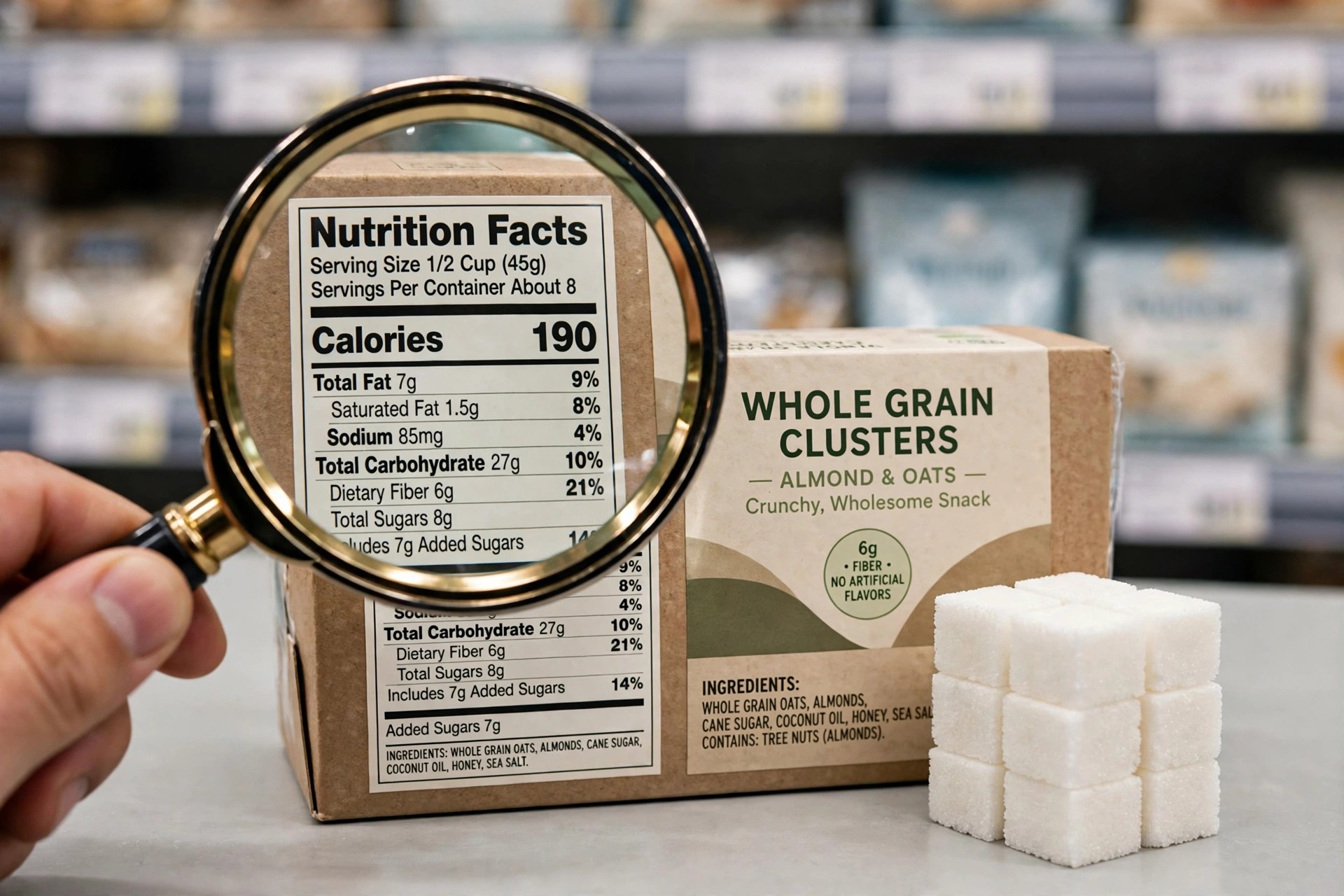
Sugar has a publicist. On the front of the package it’s “lightly sweetened,” “made with real fruit,” or “no refined sugar.” On the back, in the ingredient list, it shows up under so many aliases that you could read the whole label and never once see the word sugar.
That’s not an accident. Ingredients are listed by weight, heaviest first. Split one load of sugar into four different sweeteners and each one slides down the list — suddenly a product that’s mostly sugar looks like it’s mostly oats, flour, or fruit. The nutrition panel has an “Added Sugars” line now, which helps. But it only helps if you know what you’re looking at.
Here are the 26 names to know, grouped the way they actually show up in your pantry.
The syrups
1. High-fructose corn syrup. The most famous alias. Soda, salad dressing, ketchup, bread, crackers — if it’s sweet and shelf-stable, check for this first.
2. Corn syrup / corn syrup solids. Glucose from cornstarch. The “solids” version hides in coffee creamers, drink mixes, and seasoning blends.
3. Glucose syrup. The generic name, common in candy, baked goods, and imported products. It is sugar in a trench coat.
4. Brown rice syrup. The health-food regular — granola bars, cereals, and “natural” snacks. Your blood sugar treats it exactly like the syrups above.
5. Barley malt syrup. Found in bagels, malted drinks, and cereals. Roughly half as sweet as sugar, which means manufacturers can use more of it.
6. Golden syrup. A cane-sugar syrup common in British-style baking and sauces. Syrup is syrup, whatever the accent.
7. Sorghum syrup. Sold as a wholesome, old-fashioned sweetener. It is about 75% sugar.
The “-ose” family
Any ingredient ending in -ose is a sugar. Full stop.
8. Dextrose. Glucose by another name — energy drinks, baked goods, cured meats, even some IV fluids. Pure, fast sugar.
9. Maltose. Malt sugar, found in beer, bagels, and malt-flavored cereals and shakes.
10. Fructose / crystalline fructose. Marketed as fruit sugar. In concentrate form, added to drinks and snacks, it’s the same fructose as in high-fructose corn syrup.
11. Sucrose. Table sugar’s chemical name. If a label says sucrose instead of sugar, nothing has changed but the font.
12. Glucose. Sometimes listed plainly, sometimes as liquid glucose. Either way: sugar.
13. Lactose. Milk sugar. This one is naturally present in dairy rather than added — but it still counts in the Total Sugars line, and sweetened dairy products stack added sugars on top of it.
14. Galactose. Usually appears as part of other sweeteners rather than on its own. If you see it, you’re reading a sugar roll call.
The “natural” disguises
15. Agave nectar. The health halo champion. It’s higher in fructose than high-fructose corn syrup — often 70–90% fructose. Natural origin, same metabolic bill.
16. Evaporated cane juice. This one was so misleading that the FDA issued guidance saying it shouldn’t be used — juice sounds like fruit; it’s sugar. It still lingers on older-style “natural” packaging, now usually relabeled as cane sugar.
17. Fruit juice concentrate. The biggest loophole in the “no added sugar” world. Apple, pear, and grape juice concentrates are used to sweeten everything from toddler snacks to “100% natural” bars. Concentrated fruit juice is sugar with the fruit removed.
18. Coconut sugar. Trendy, minimally processed, and still about 70–80% sucrose. Your pancreas cannot tell it apart from table sugar.
19. Honey. Real honey has trace enzymes and a lovely story. It is also roughly 80% sugar and raises blood glucose. Raw, local, organic — still counts.
20. Maple syrup. Pancakes aside, it sneaks into granola, bacon, dressings, and “maple-flavored” everything. About two-thirds sucrose.
21. Molasses. The residue of sugar refining, wearing a minerals costume. The trace iron doesn’t change what the rest of it is.
The pantry names
22. Maltodextrin. The sneakiest entry on this list. It’s a starch-derived carbohydrate that is not classified as a sugar on the label — so it doesn’t appear in the Sugars line at all — yet it has a glycemic index higher than table sugar. Sports drinks, sauces, sugar-free products, and spice mixes are full of it.
23. Raw sugar, turbinado, and demerara. Less-refined cane sugars sold as the virtuous option. They are 96–99% sucrose. The tan color is not a nutrient.
24. Brown sugar. White sugar with molasses added back. That’s it. That’s the whole trick.
25. Ethyl maltol. A flavor enhancer that tastes intensely sweet and makes products taste sugared beyond their actual content — common in candy, baked goods, and flavored drinks.
26. Diastatic malt / malt extract. Baker’s ingredients that convert starches into sugars during processing. The sugar forms in the food even when none was poured in.
How to count what counts
You don’t need to memorize all 26. You need three habits:
Read the Added Sugars line, not the front of the box. Grams first, then the % Daily Value. Four grams is one teaspoon. A “healthy” granola bar with 12 grams of added sugar is three teaspoons wearing a fitness outfit.
Count the aliases in the first five ingredients. One sugar name is a sweetened food. Three or more — in any combination from the list above — and you’re holding a dessert that hired a publicist.
Check the usual suspects. The worst offenders are rarely candy. They’re flavored yogurt, granola, protein bars, pasta sauce, salad dressing, barbecue sauce, oat milk, and “low-fat” anything — fat removed, sugar invited in.
The point isn’t zero sugar
Sugar you choose — a dessert you actually wanted, eaten on purpose — is not the problem. The problem is the sugar you never agreed to: the nine teaspoons spread across a day of “healthy” foods, none of which you tasted as sweet.
Once you can read the aliases, the label stops being a marketing document and goes back to being a label. Count what counts, spend your sugar on purpose, and let the other 26 names retire.
Educational information only — not a substitute for individualized medical advice. If you manage diabetes or another blood-sugar condition, talk with your clinician about targets that fit your situation.
Use this information well
Bring questions, symptoms, medication concerns, and relevant measurements to a qualified healthcare professional who can interpret them in your personal context.
Related articles

The 30-Second Label Read: How to Tell a Real Supplement From a Marketing Exercise
Most supplement labels are marketing first, information second. Here's the 30-second read that separates the two — and how to shrink your shelf to a short list.

10 Supplements Doctors Actually Take Themselves
10 Supplements Doctors Actually Take Themselves Most doctors take far fewer supplements than the wellness aisle suggests, and the ones they do take tend to fix a specific…

eHealthHub: A Smarter Way to Explore Your Health
eHealthHub: A Smarter Way to Explore Your Health Health Guides, Interactive Tools, Medication Resources, Wellness Games and the Future of Healthcare—all in one place Health information is everywhere.…

Heart Health – What You Need to Know to Protect Your Most Vital Organ – Heart Health Guide
Heart Health – What You Need to Know to Protect Your Most Vital Organ – Heart Health Guide Heart disease remains the leading cause of death worldwide, yet…