Ultra-Processed After 50: What the Evidence Says About Your Grocery Cart
Walk down any supermarket aisle and most of what you see was designed in a lab as much as a kitchen. It tastes good, it keeps forever, and…
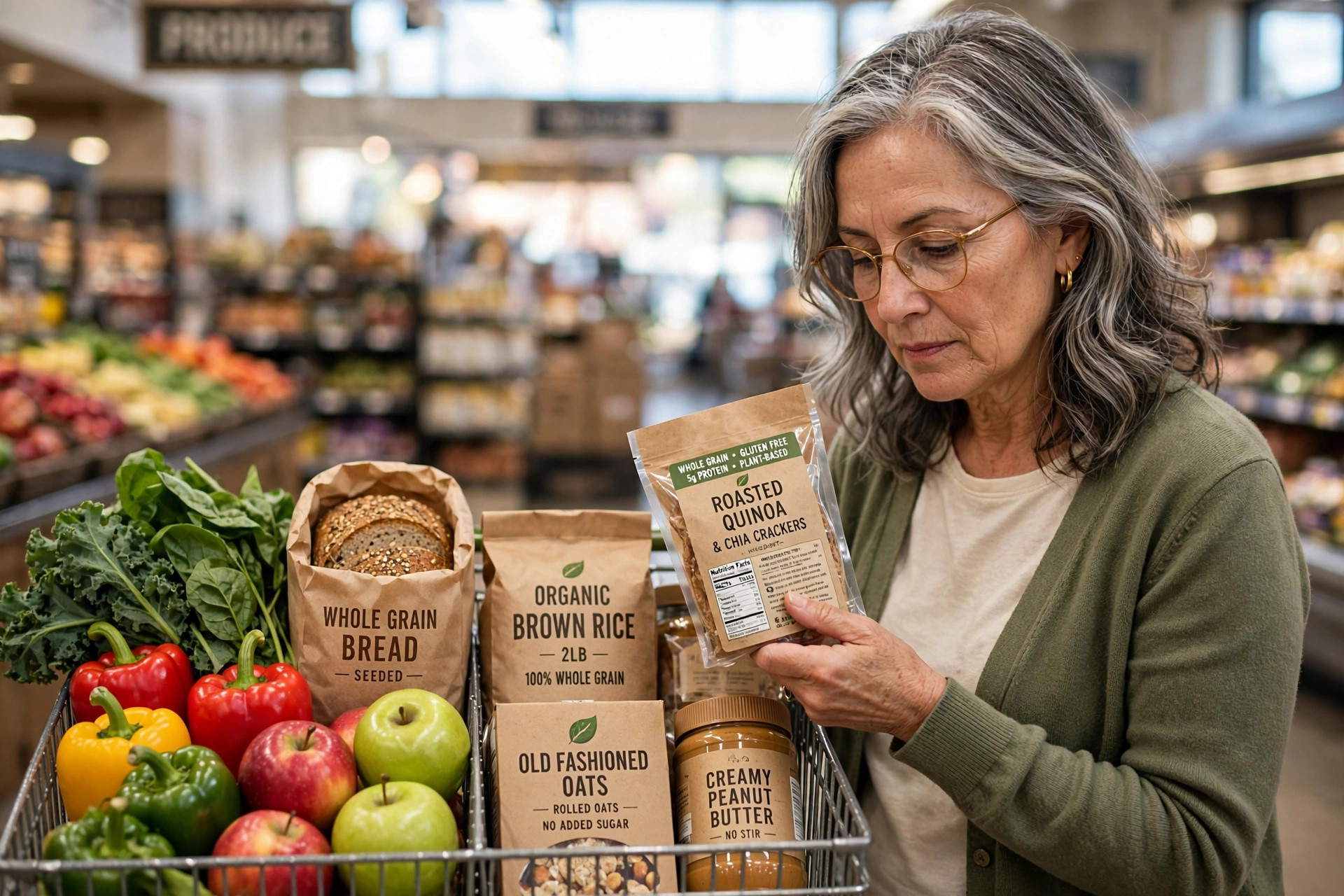
Walk down any supermarket aisle and most of what you see was designed in a lab as much as a kitchen. It tastes good, it keeps forever, and it’s cheap. It is also, according to the largest evidence reviews ever assembled on the subject, quietly working against your heart, your metabolism, and your brain — and the effects matter more after 50, not less.
This isn’t about guilt or giving up foods you enjoy. It’s about what the evidence actually says, where it’s strong, where it’s honestly uncertain, and the surprisingly small shifts that researchers keep finding make a measurable difference.
First, What Counts as “Ultra-Processed”?
Researchers use a system called NOVA, developed by Professor Carlos Monteiro and colleagues at the University of São Paulo, which sorts food by how it’s made rather than by nutrients alone. At one end sit unprocessed or minimally processed foods: vegetables, fruit, eggs, plain meat and fish, milk, oats, rice. At the other end — group four, the ultra-processed category — sit industrial formulations built from refined ingredients and additives you’d never find in a home kitchen: protein isolates, high-fructose corn syrup, hydrogenated oils, emulsifiers, colorings, flavorings, and sweeteners.
Think soft drinks, packaged snacks, instant noodles, reconstituted meat products like nuggets and many sausages, ready-to-heat meals, sugary breakfast cereals, and much of the packaged bread and baked-goods aisle.
A quick test that works in the aisle: read the ingredient list. If it contains things you couldn’t buy to cook with at home, it’s almost certainly ultra-processed. By that measure, ultra-processed products now supply more than half of the calories in the average American diet — a share that has stayed above 50% in both the US and UK for two decades.
What the Biggest Reviews Found
Two enormous evidence summaries anchor what we know.
In 2024, The BMJ published an umbrella review — a review of reviews — pooling 45 analyses covering nearly 10 million people. Higher ultra-processed food intake was associated with 32 adverse health outcomes. The evidence rated strongest linked the highest intake to about a 50% higher risk of dying from cardiovascular disease, a 48–53% higher risk of anxiety and common mental disorders, and a 12% higher risk of type 2 diabetes. Highly suggestive evidence added a 21% higher risk of death from any cause, plus obesity, depression, and sleep problems.
Then, in late 2025, The Lancet published a three-paper series from 43 international experts. Their systematic review covered 104 long-term studies; 92 of them reported greater risks of one or more chronic diseases among people eating the most ultra-processed food, with significant associations for 12 conditions, including obesity, type 2 diabetes, cardiovascular disease, depression, and early death.
The proposed reasons are consistent across both reviews: these products tend to crowd out fiber, protein, and protective plant compounds while delivering more sugar, unhealthy fats, and sodium; they’re engineered to be easy to overeat; and they add exposure to additives and packaging chemicals whose long-term effects are still being mapped.
Why It Matters More After 50
The newest evidence is aimed squarely at your age group — and at your brain.
A study published in June 2026 in the American Journal of Public Health, led by Harvard researchers, followed 5,370 older adults in the US Health and Retirement Study (average age 64) for nearly nine years. The people who ate the most ultra-processed food had a 58% higher risk of developing dementia and a 46% higher risk of cognitive impairment short of dementia than those who ate the least. The flip side was just as striking: people who ate the most whole, minimally processed food had a 41% lower risk of dementia.
A second 2026 study, from Monash University with the University of São Paulo and Deakin University, examined more than 2,100 middle-aged and older Australian adults and found that every 10% increase in the ultra-processed share of the diet — roughly one small bag of chips a day — was linked to measurably worse attention and processing speed. Notably, this held even for people eating an otherwise healthy Mediterranean-style diet. And there’s a hopeful finding from related Harvard work: people who gradually replaced ultra-processed foods with whole foods over five to six years had about a 12% lower risk of cognitive decline. Change, even slow change, registered.
Age amplifies the rest of the picture too. The cardiometabolic risks in the big reviews — blood pressure, blood sugar, cholesterol — are the very conditions that accumulate after 50. And because ultra-processed diets tend to run low on protein and fiber, they work against muscle maintenance at exactly the age when holding onto muscle protects your mobility, balance, and independence.
Why These Foods Are So Easy to Overeat
If you’ve ever finished a bag you only meant to open, that’s not a character flaw — it’s the design working. In a controlled NIH inpatient trial, volunteers were offered ultra-processed and unprocessed meals matched for calories, sugar, fat, and fiber. On the ultra-processed diet, people spontaneously ate about 500 extra calories a day and gained roughly two pounds in two weeks; on the unprocessed diet, they ate less and lost weight.
Researchers point to a combination of high energy density, soft textures that let you eat quickly (giving fullness signals no time to arrive), and flavor engineering that keeps each bite interesting. Knowing the mechanism helps: the goal isn’t more willpower. It’s changing what’s within arm’s reach.
Sponsored — Partner Offer

The Honest Nuances
Three qualifications keep this evidence in perspective:
- Association isn’t proof. Most of this research is observational — it follows people’s diets and health over time and can’t fully separate food processing from income, lifestyle, and other habits. The short inpatient trial above is an exception, not the rule.
- Not every ultra-processed food is equal. The category is broad. Some items that technically qualify — certain whole-grain packaged breads and yogurts, for example — show neutral or even favorable profiles in subgroup analyses, while soft drinks, processed meats, and packaged snacks consistently sit at the harmful end. The Lancet authors themselves flag these subgroups as an area where the picture is still developing.
- The pattern matters more than any single product. Risk rises with the share of your diet that’s ultra-processed. Nobody’s health turns on one frozen pizza.
A Smarter Cart: Swaps That Actually Stick
You don’t need a perfect cart. Researchers measure differences at the level of a 10% shift — so aim there first.
Start with the worst offenders:
- Sugary drinks and juices → sparkling water with citrus, unsweetened iced tea
- Sugary cereals and sweetened instant oatmeal → plain oats with fruit and nuts
- Chips and packaged snack cakes → a small handful of nuts, air-popped popcorn, fruit with cheese
- Deli meats and nuggets → rotisserie chicken, eggs, canned tuna or salmon, beans
- Frozen ready meals most nights → “shortcut whole foods”: pre-washed greens, frozen vegetables, microwave brown-rice pouches, a rotisserie chicken. Convenience isn’t the enemy — formulation is.
Three label checks that take ten seconds:
- The kitchen test. Ingredients you wouldn’t stock at home (isolates, syrups, emulsifiers, dyes) = ultra-processed.
- Fiber and protein. Look for at least 3 grams of fiber per serving and some real protein; ultra-processed products usually have neither.
- Sugar and sodium near the top. If either appears in the first three ingredients, it’s a dessert or a salt delivery system wearing a health halo.
One habit to build: shop the perimeter first — produce, dairy, meat and fish, eggs — and treat the middle aisles as a sometimes destination rather than the main event. And if better sleep is also on your list, note that the BMJ review linked high ultra-processed intake to sleep problems too; our guide to the stress-sleep loop explains how evenings wind down better, and the 7-day sleep reset is a gentle place to start.
The Bottom Line
The evidence isn’t that one packaged food will hurt you. It’s that a diet built on ultra-processed products — now the default for more than half of American calories — is consistently linked to worse heart, metabolic, mental, and brain outcomes, and the brain findings in older adults are the newest and most concerning of all. The same research offers the way out: gradual swaps toward whole and minimally processed foods, even at the pace of one grocery trip at a time, are linked to measurably better outcomes. Your cart is one of the few health levers you control completely. Use it like it matters — because after 50, it does.
Sources: Lane MM et al., The BMJ (2024), umbrella review of ultra-processed food and health outcomes; Monteiro CA et al., The Lancet Series on Ultra-Processed Foods and Human Health (2025); American Journal of Public Health (June 2026), ultra-processed food and dementia in the Health and Retirement Study; Cardoso BR et al., Alzheimer’s & Dementia: Diagnosis, Assessment & Disease Monitoring (2026); Hall KD et al., Cell Metabolism (2019), NIH inpatient feeding trial.
This article is for general educational purposes only and is not medical advice. It does not replace guidance from your own clinician or dietitian, especially if you manage a condition affected by diet. If you’re considering significant dietary changes, a conversation with your healthcare provider is a good first step.
Use this information well
Bring questions, symptoms, medication concerns, and relevant measurements to a qualified healthcare professional who can interpret them in your personal context.
Related articles

The Stress-Sleep Loop: Why You’re Wired at Night and Exhausted by Day
The 3 A.M. Problem You know the pattern. Lights out at 10:30, and your brain decides it’s meeting time. The conversation you should have handled differently. The bill.…

Sleep Like It Matters: A 7-Day Reset for Better Nights After 50
Why Sleep Changes After 50 — and Why It Matters If your sleep isn’t what it used to be, you’re not imagining it. As we age, sleep architecture…