Why Your Blood Sugar Spikes When You’re Stressed
Why Your Blood Sugar Spikes When You’re Stressed The Hidden Connection Between Stress, Cortisol, and Metabolic Health Most people think blood sugar spikes are caused only by food.…

Why Your Blood Sugar Spikes When You’re Stressed
The Hidden Connection Between Stress, Cortisol, and Metabolic Health
Most people think blood sugar spikes are caused only by food.
Too much sugar.
Too many carbohydrates.
Too much junk food.
While diet certainly plays a major role, there is another powerful factor that many people overlook:
Stress.
In fact, your blood sugar can rise significantly even if you haven’t eaten anything at all.
The reason lies in a fascinating survival mechanism that evolved thousands of years ago but is now being activated by modern life.

Your Body Thinks Stress Is an Emergency
When you experience stress, your brain activates what scientists call the “fight-or-flight” response.
This response evolved to protect humans from immediate threats.
Imagine your ancestors encountering a predator.
Their bodies needed instant energy to:
- Run
- Fight
- Escape danger
To make that happen, the brain signals the release of stress hormones including:
- Cortisol
- Adrenaline (epinephrine)
- Norepinephrine
These hormones prepare the body for action.
One of their key jobs is increasing blood sugar.
Why Stress Raises Blood Sugar
Your brain views stress as a signal that you may need extra fuel.
As a result, your liver begins releasing stored glucose into the bloodstream.
The process happens quickly.
Your body essentially says:
“Something dangerous is happening. We need energy immediately.”
Even if you’re sitting at a desk worrying about work, your body reacts similarly to how it would if you were running from a threat.
Blood sugar rises.
Energy becomes available.
The problem?
Most modern stress doesn’t involve physical activity.
The glucose remains in circulation.
Over time, repeated stress can contribute to chronically elevated blood sugar levels.
The Role of Cortisol
Cortisol is often called the “stress hormone.”
It is essential for survival, but chronic elevations can create metabolic problems.
High cortisol can:
- Increase blood sugar
- Increase insulin resistance
- Promote abdominal fat storage
- Increase appetite
- Trigger cravings for sugary foods
- Disrupt sleep
When cortisol remains elevated for extended periods, the body becomes less responsive to insulin.
This condition is known as insulin resistance.
Insulin resistance makes it harder for cells to absorb glucose, causing blood sugar to remain elevated longer.
Stress Cravings Are Not Just In Your Head
Have you ever noticed that stressful days often lead to cravings?
There is a biological reason.
Stress hormones can increase appetite and drive cravings for foods high in:
- Sugar
- Fat
- Refined carbohydrates
These foods temporarily activate reward pathways in the brain.
The result is a vicious cycle:
Stress → Blood Sugar Spike → Cravings → More Sugar → Larger Blood Sugar Spike
Over time, this pattern can contribute to:
- Weight gain
- Prediabetes
- Type 2 diabetes
- Metabolic syndrome
Poor Sleep Makes Everything Worse
Stress and sleep are closely connected.
When stress affects sleep quality, blood sugar regulation often suffers.
Research consistently shows that inadequate sleep can:
- Increase insulin resistance
- Elevate cortisol
- Increase hunger hormones
- Increase sugar cravings
Even a few nights of poor sleep can negatively impact glucose metabolism.
This is one reason people often feel hungrier and crave unhealthy foods after a bad night’s sleep.
The Hidden Link Between Belly Fat and Stress
If you struggle with stubborn belly fat, stress may be playing a larger role than you realize.
Chronically elevated cortisol encourages the body to store fat around the abdomen.
Visceral fat—the fat surrounding internal organs—is particularly associated with:
- Insulin resistance
- Inflammation
- Cardiovascular disease
- Type 2 diabetes
This explains why some people gain weight during stressful periods despite not dramatically changing their diet.
Signs Stress May Be Affecting Your Blood Sugar
You may notice:
- Afternoon energy crashes
- Sugar cravings
- Increased hunger
- Difficulty losing weight
- Brain fog
- Irritability
- Poor sleep
- Increased abdominal fat
- Feeling tired after meals
While these symptoms can have multiple causes, stress-related blood sugar dysregulation is often part of the picture.
How to Reduce Stress-Related Blood Sugar Spikes
The good news is that managing stress can improve both mental and metabolic health.
1. Move Your Body
Exercise helps burn excess glucose released during stress.
Even:
- Walking
- Cycling
- Strength training
- Stretching
can improve blood sugar control.
A simple 10-20 minute walk after a stressful event can make a meaningful difference.
2. Prioritize Sleep
Aim for:
- 7-9 hours of quality sleep
- Consistent bedtimes
- Reduced screen exposure before bed
Better sleep improves insulin sensitivity and lowers cortisol.
3. Practice Stress Management
Consider:
- Meditation
- Deep breathing
- Yoga
- Journaling
- Mindfulness
- Spending time outdoors
These activities help activate the parasympathetic nervous system, often called the “rest and digest” mode.
4. Eat Protein and Fiber
Balanced meals can reduce blood sugar swings.
Focus on:
- Lean proteins
- Vegetables
- Healthy fats
- High-fiber foods
These nutrients slow digestion and help stabilize glucose levels.
5. Limit Excess Sugar
When stressed, it’s tempting to reach for comfort foods.
Instead, try:
- Nuts
- Greek yogurt
- Fruit
- Protein-rich snacks
These options provide energy without causing major glucose spikes.
6. Build Strong Social Connections
Human connection helps reduce stress hormones.
Spending time with supportive friends and family can positively affect both mental health and blood sugar regulation.
Why Managing Stress Is a Health Strategy
Most people view stress as a mental health issue.
But stress is also a metabolic issue.
Every stressful event triggers physical changes throughout the body.
When stress becomes chronic, the effects can accumulate over months and years.
Managing stress isn’t simply about feeling calmer.
It’s about protecting:
- Your heart
- Your brain
- Your metabolism
- Your hormones
- Your long-term health
Final Thoughts
If your blood sugar seems difficult to control, food may not be the only factor.
Stress, sleep, hormones, and lifestyle all influence how your body regulates glucose.
The next time you’re feeling overwhelmed, remember:
Your body doesn’t know the difference between a tiger chasing you and an overflowing inbox.
Both can trigger the same biological response.
By managing stress effectively, improving sleep, staying active, and prioritizing overall wellness, you can help stabilize blood sugar, reduce cravings, improve energy, and support long-term health.
Sometimes the most powerful blood sugar strategy isn’t eating less sugar.
It’s reducing the stress that’s telling your body it needs more.
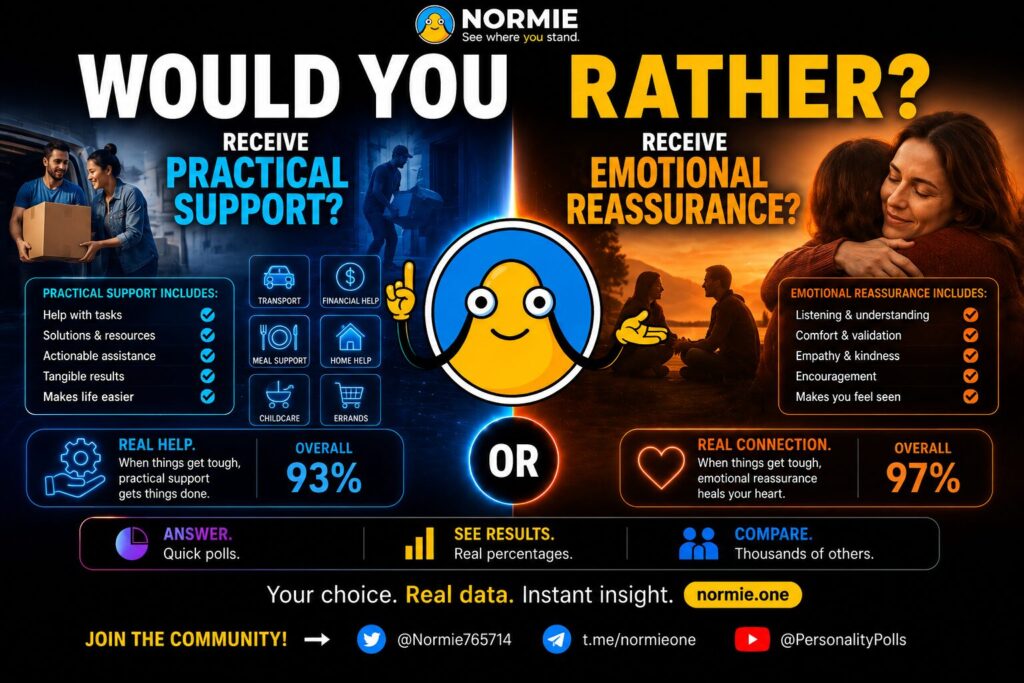
Would You Rather… Receive Practical Support OR Receive Emotional Reassurance?
When life gets difficult, what helps you more?
Would you rather have someone step in and solve the problem, offer resources, and take action?
Or would you rather have someone listen, understand your feelings, and remind you that you’re not alone?
Practical support can make challenges easier to manage.
Emotional reassurance can make challenges easier to carry.
Neither answer is wrong—but your choice may reveal a lot about your personality, relationships, and what you value most when facing adversity.
Vote now and see how your answer compares with thousands of others on Normie.
Your choice. Real data. Instant insight.
Use this information well
Bring questions, symptoms, medication concerns, and relevant measurements to a qualified healthcare professional who can interpret them in your personal context.
Related articles

eHealthHub: A Smarter Way to Explore Your Health
eHealthHub: A Smarter Way to Explore Your Health Health Guides, Interactive Tools, Medication Resources, Wellness Games and the Future of Healthcare—all in one place Health information is everywhere.…

Heart Health – What You Need to Know to Protect Your Most Vital Organ – Heart Health Guide
Heart Health – What You Need to Know to Protect Your Most Vital Organ – Heart Health Guide Heart disease remains the leading cause of death worldwide, yet…

Ozempic, Metformin & Lipitor: The Shocking Price Gap Between the U.S. and Canada
Ozempic, Metformin & Lipitor: The Shocking Price Gap Between the U.S. and Canada Imagine picking up your Ozempic prescription at the pharmacy. The pharmacist slides a receipt…

Why People Are Turning to AI Instead of Therapists — And Why Human Connection Still Matters
Why People Are Turning to AI Instead of Therapists — And Why Human Connection Still Matters In recent years, I’ve seen an intriguing and increasingly common conversation across…